
SWEET SHOUMEI WHITE
MEDIUM
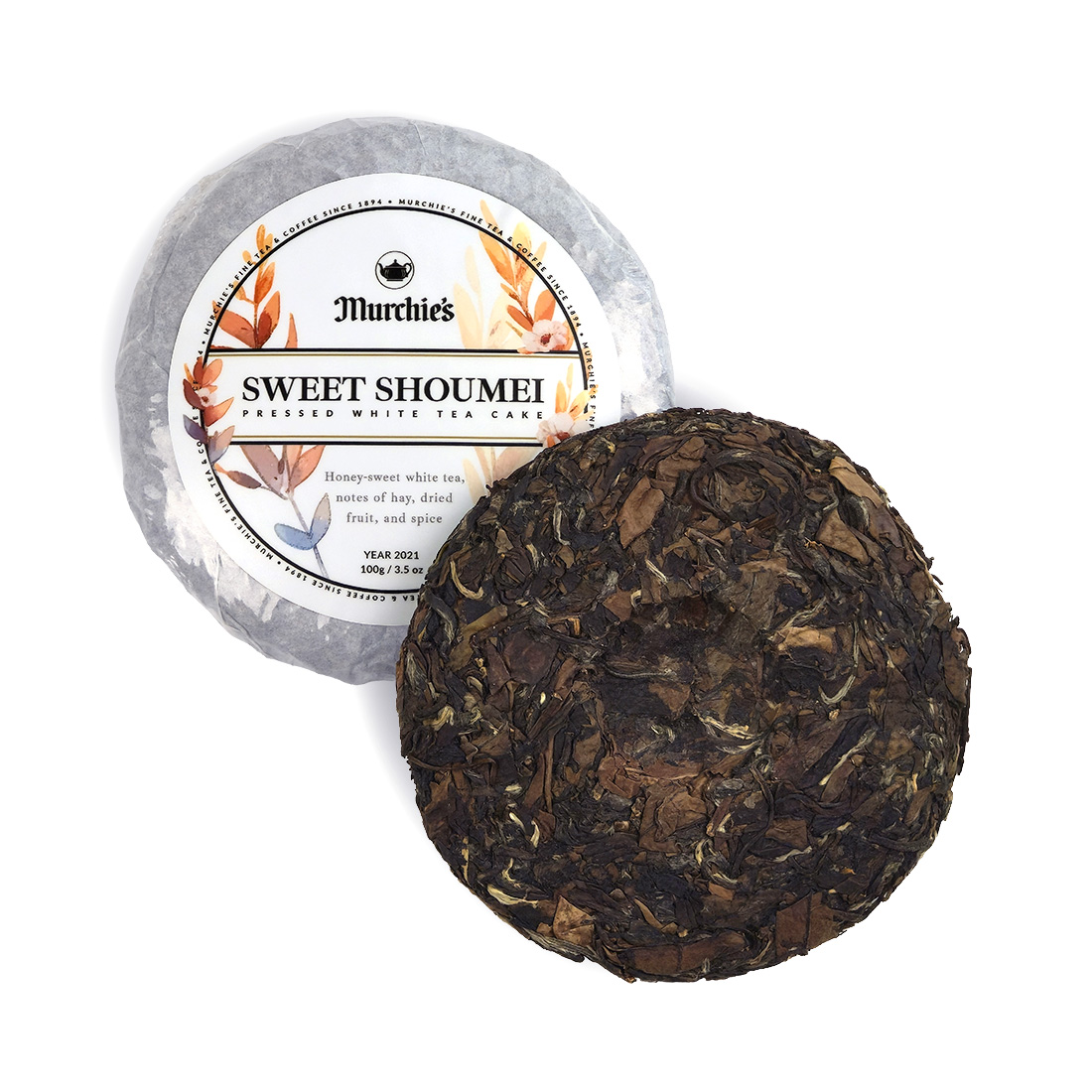
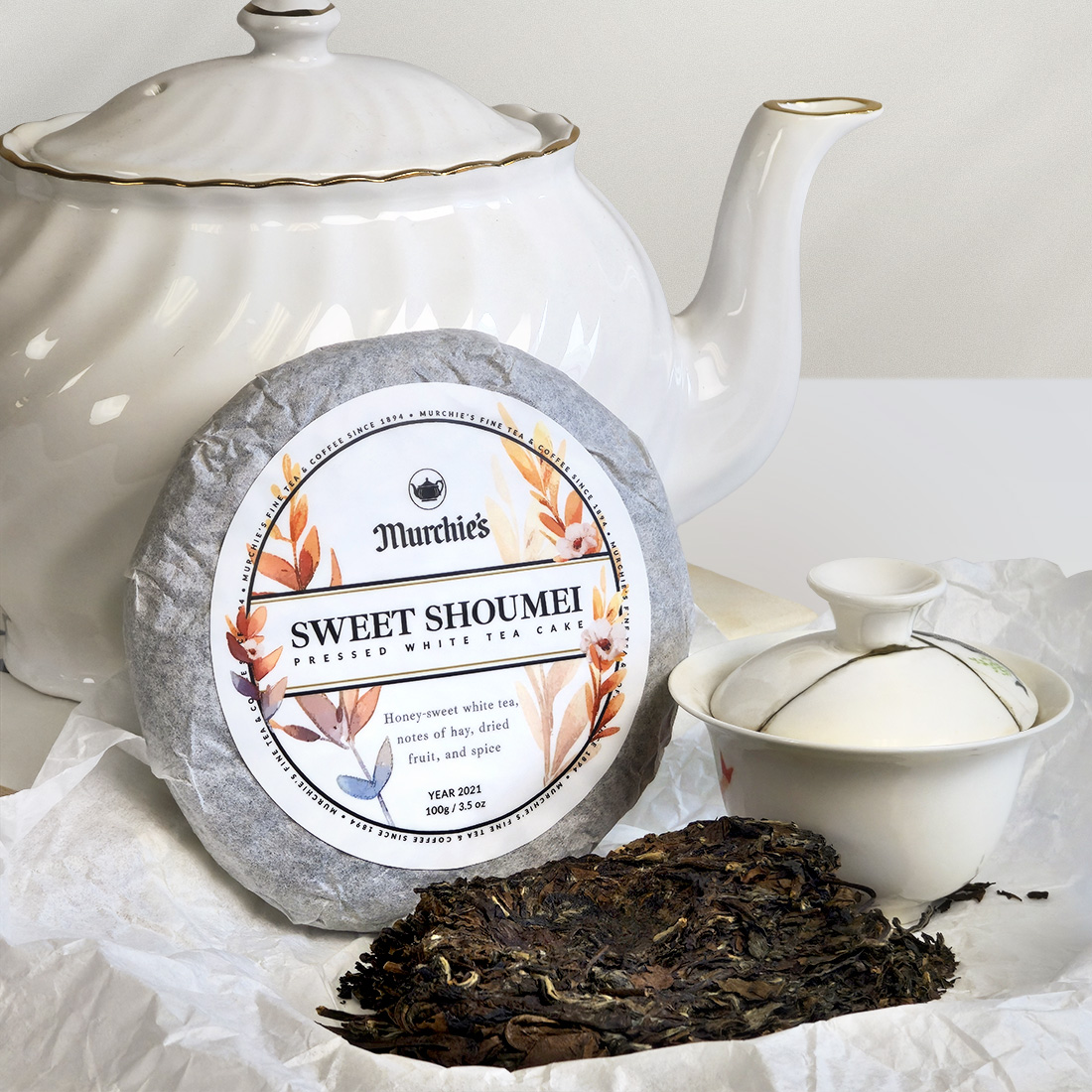
Honey-sweet white tea, notes of hay, dried fruit, and spice.
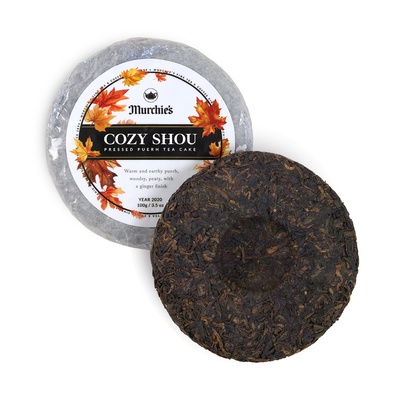
This 100 gram pressed tea cake is an excellent introduction to lightly aged teas. Each cake provides 30 to 40 brewing sessions depending on method. See "Brewing & Storage" below for more.
Limited Release: Specially selected by our Tasting Lab to enjoy for the season. While supplies last!
Price
Price
$23.95
 SOURCED, BLENDED AND PACKAGED IN-HOUSE
 PRICES LISTED IN CANADIAN DOLLARS (CAD)
Aged since: 2021
Produced in Fuding, China
This tea comes in a compressed into a cake, called a ‘bingcha’ or ‘cha bing’ (‘cake tea’).
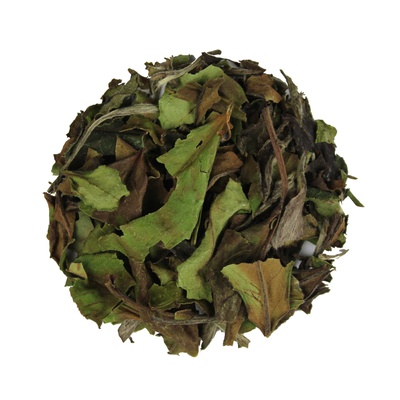
‘Shou Mei’, translating literally as ‘longevity eyebrow’, is a grade of white tea, similar to White Peony/Bai Mudan. These gradings refer to the plucking style of tea—whereas Bai Mudan requires a high pluck standard—one bud and one leaf—Shou Mei is plucked almost entirely of open leaf, with only minor buds. It is often picked later in the year from Bai Mudan, and has a thicker flavour.
Browned Shoumei: Called ‘New-Make Shoumei’ (新工艺寿眉), or colloquially ‘browned shoumei’ has only been around since the mid 2000s. Traditional shoumei is produced in the same way as White Peony, where the leaves are dried soon after picking to preserve the green colour and delicate taste. ‘Browned’ shoumei has an extra processing step, where it’s allowed to undergo extended withering to brown the leaf. This is meant to mimic the taste of long-term aged white tea, and gives the tea an extra sweet taste, a bit like some oolongs, such as Oriental Beauty.
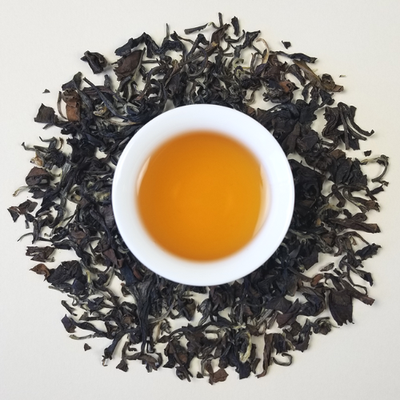
Brews a pale, yellowy orange, with an aroma of sweet hay and honey.
The taste is light but rich, and coats the mouth. Sweet clover honey, floral, mellow with woody and grain notes. It lacks the vegetalness of some other white teas, instead a bit richer, with deeper sweet hay, and a slight hint of dried fruit and spice.
This tea is made to be drunk now, and is absolutely delicious as-is! The ‘browning’ step detailed in "About This Tea" gives it a delicious, sweet, honey and spice flavour. However, if one wishes to age it further to see how the flavours might change, the tea should be stored in its paper wrapper in a cool, dry cupboard, with moderate airflow, away from any strong smells. Check back on it in five years!
Opening the Cake: This cake is small and loose enough that it can be split easily by hand. If you plan to drink it all soon, it’s easiest to break it in half from the middle, then break it into small chunks to be stored in a tin or bag. Otherwise, one can break one or two chunks off as you go. Some drinkers will use a letter opener or similar implement to pry off pieces, but we recommend starting with your hands.
Brewing Guide:
Note: Use boiling water! We know the usual recommendation for white teas is about 80°C; this tea really does best with boiling water.
- Remove the plastic wrap. Unwrap rice paper. Break off a piece of the cake roughly the size of a 1/2 tablespoon.
- Drop the piece of tea into a filter of your choice. You can also loosen the piece up with your fingers first for more even brewing.
- It's recommended to do an initial steep with boiling water for five seconds, and discard the water before steeping properly. This 'rinse' helps to open the leaves up for better brewing.
Suggested Steeping:
- Mug: Use roughly a 1/2 Tbsp piece for a regular-sized mug (8oz) in a strainer (or reusable teabag). Pour over boiling water, discard after five seconds (this rinse helps open up the leaves, and wash away any small broken leaves). Using freshly boiled water, steep for two minutes. Second steep, three minutes. Third steep, eight minutes. Steep-time can be adjusted for a larger mug. Add an extra minute to all of the times above if you prefer a stronger cup.
- Teapot: Use a couple larger pieces, proportional to your teapot size. Pour over boiling water, discard after five seconds. Steep at two minutes, serve by pouring through a strainer, but leave the leaves in the teapot. Top up teapot immediately with fresh boiled water and keep steeping. Top up teapot as needed after each cup poured until the tea loses flavour.
- Gaiwan: Use a 1/2 Tbsp chunk of leaf, and adjust steeping time depending on size of the gaiwan (100-120 mL). Rinse with boiling water as above, to help open up the leaves. First, second and third steeps, twenty seconds each. Increase by ten seconds for subsequent steeps.
Be the first to review!
Write your Own Review
You're reviewing: Sweet Shoumei White
Also Recommended
Steeping the Best (Guide)
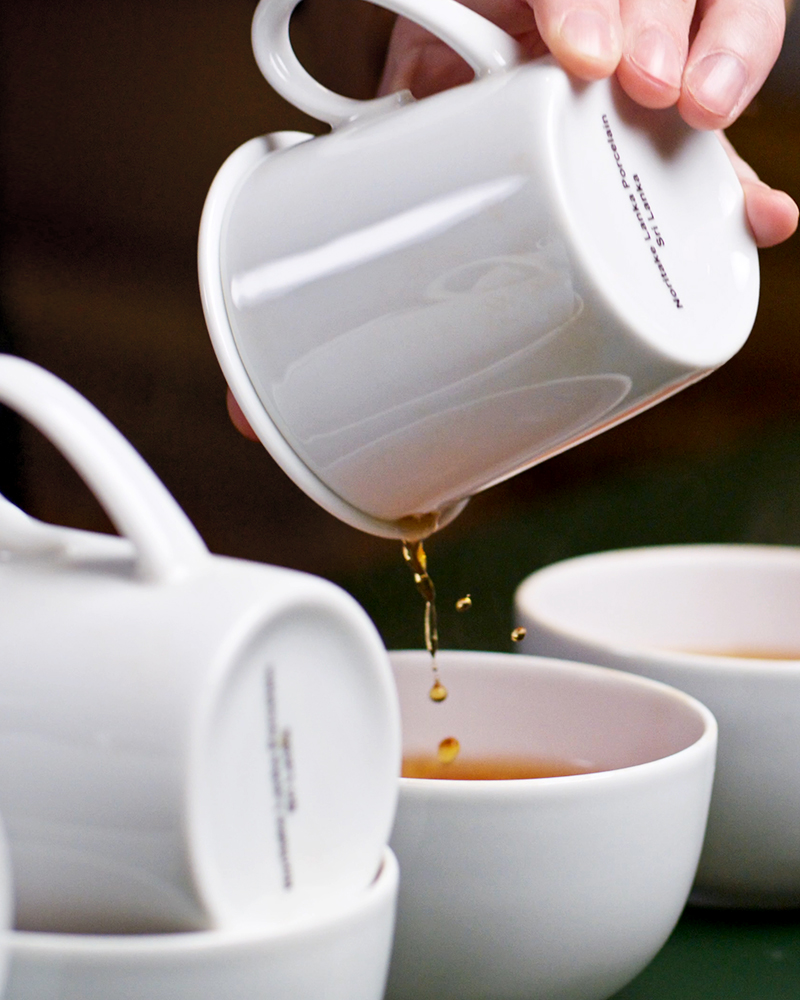
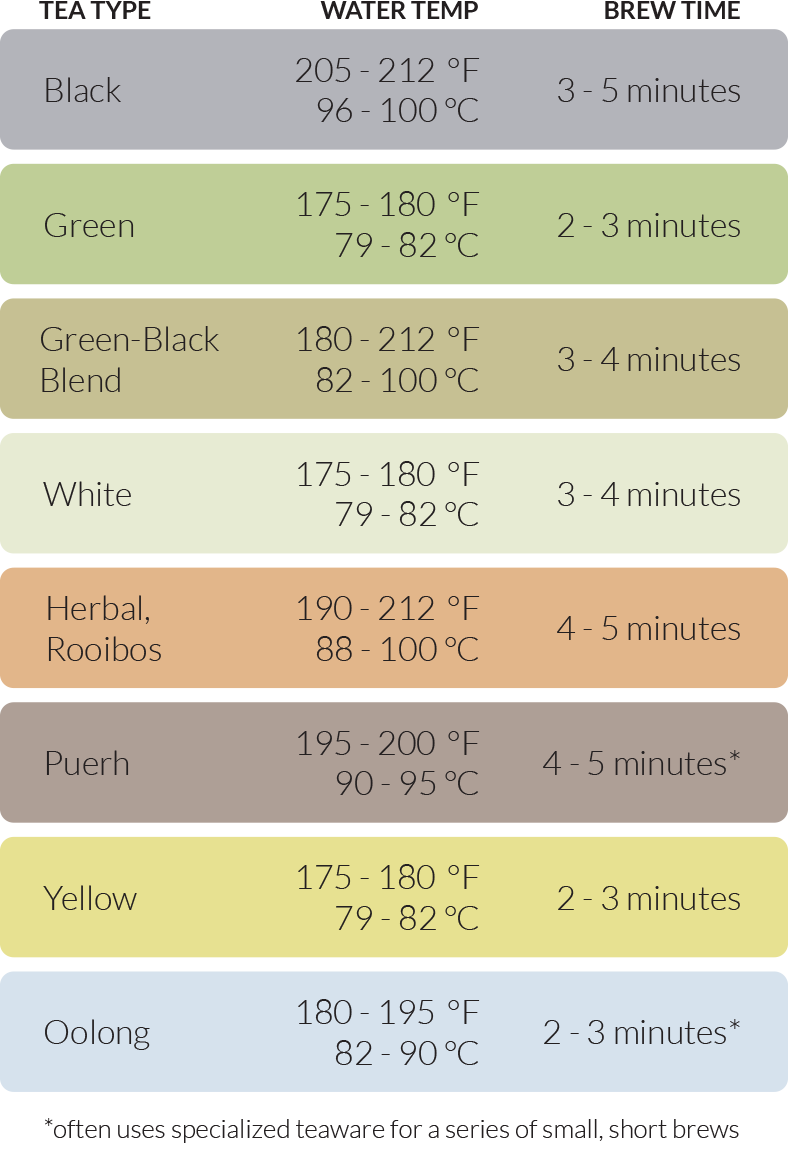
Different types of teas should be steeped according to certain times and water temperatures to bring out their best flavours. Use this guide as a starting point, and then experiment until you find the perfect brewing method for your favourite tea.
Based on approximately one level teaspoon (2.5 g) of loose tea or one tea bag per 6-8 ounce (180-240 mL) cup. For stronger flavour, add more tea. Brewing for longer may increase the strength of the tea, but will likely also cause bitterness.
Tea Bags vs. Loose Tea
While our tea bags and loose tea are crafted to match the same flavour profile, there are discernable effects between the two formats. Namely, the leaves inside tea bags are milled, making it much finer and a quicker brew, while loose tea can take a couple minutes longer to steep. Tea bags are very convenient, but loose tea can be more visually appealing and brewed with a reusable infuser.
- Tea bags: steep for 3 - 4 minutes
- Loose tea: steep for 4 - 5 minutes
General Steeping Temperatures
The table included here shows some general guidelines for steeping different kinds of tea. Be mindful that some teas, even two from the same category, will brew differently than others. In particular, our green-black blends will often have different ratios of green and black teas - the more green-leaning ones should be brewed at a lower temperature range. Experimentation is highly encouraged, as tea is very much a matter of personal taste.
Puerh and oolong teas are often steeped multiple times for a shorter period of time in smaller brewing vessels. This method creates a curious exploration of the tea as it unfurls, developing new flavours with each subsequent brew - often making for great social conversation.
If you're unsure, try steeping in the middle range for your tea type. If the result is too bitter, steep at a lower temperature or for a shorter time. If the result is flat, try a higher temperature.
All About Iced Tea
Cold Brew - Recommended for green, fruit and herbal teas
A convenient way to make iced tea and forget it. Many teas take as little as 2 hours, but leave in the fridge for 24 hours for best results. Cold brews can last up to a week when refrigerated, with the exception of fruit teas (real fruit pieces) lasting up to a few days due to sugar content. Blueberry Green and Spring Green are excellent cold brewed.
- 1 teaspoon green or herbal tea per 1 cup cold water, refrigerate 1-24 hours
- 1 tablespoon fruit tea per 1 cup cold water, refrigerate 1-24 hours
Hot Brew & Chill - Recommended for rooibos, black, oolong, and green-black teas
Short on time? Make your hot tea at 2-3x the regular strength, then flash-chill over ice! A strong concentrate of tea can be diluted with ice to suit your tastes. Lemon Black, Black Currant and Canadian Breakfast do exceptionally well with this method.
- 2-3 teaspoons tea per 1 cup hot water, brew 5 minutes and pour over ice
Iced Tea Additions - Try adding fruit juice or soda water, or milk for an iced tea latte
For a refreshing twist, mix half lemonade or fruit juice, or add some fresh fruit or crushed mint. For an iced latte, make your tea extra strong and top it up with milk. Try this method with our Earl Grey or Bombay Chai!